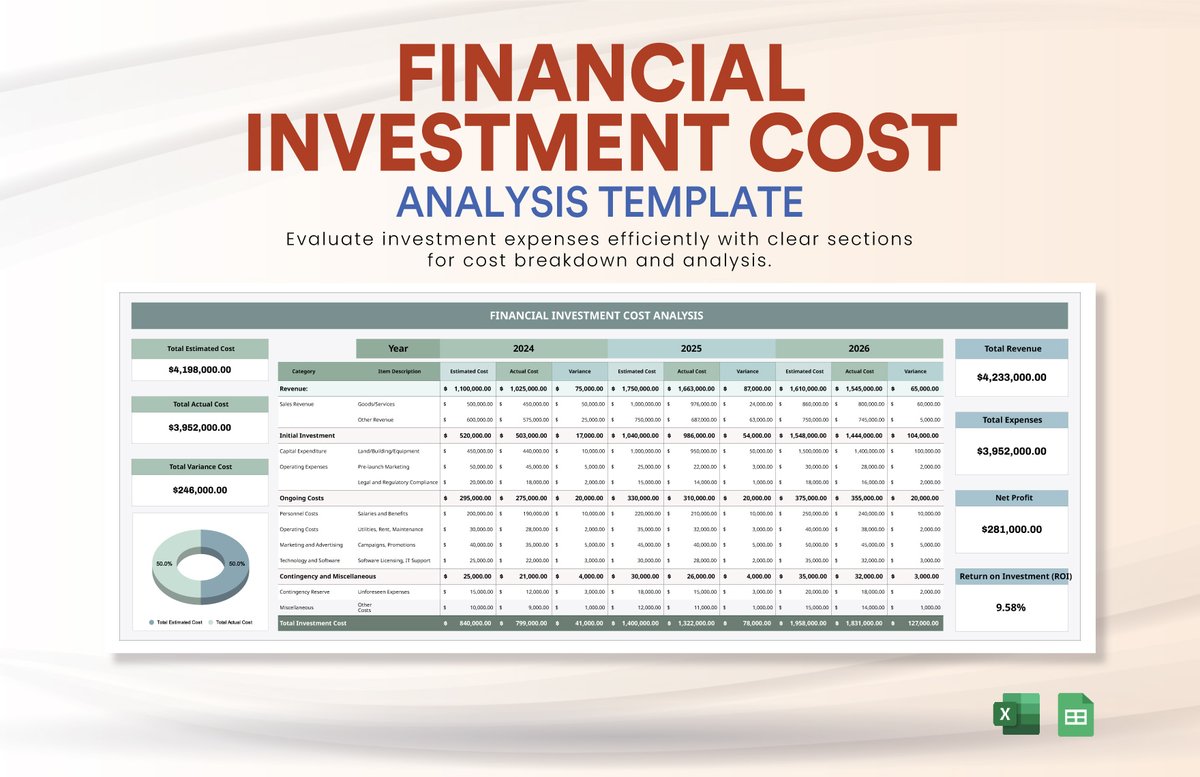
When you embark on a new project, whether it’s launching a product, building infrastructure, or implementing a new policy, the stakes are high. You're investing precious resources—money, time, and human capital—and you need to know you're getting the best possible return. That's where robust Cost Analysis and Value for Money become your indispensable compass, guiding you beyond mere price tags to truly understand impact and worth. It's about asking not just "How much does it cost?" but "What true value are we creating, and how effectively?"
It’s a subtle but critical shift in mindset that separates thriving projects from those that merely survive, or worse, fail to deliver on their promise. This guide will equip you with the frameworks, insights, and practical steps to master this crucial discipline.
At a Glance: Key Takeaways
- Cost-Benefit Analysis (CBA) is primarily financial, quantifying all project costs and benefits in monetary terms to assess short-term economic viability.
- Value for Money (VfM) takes a broader, holistic view, considering not just financial returns but also social, environmental, and long-term impact, focusing on sustainability and resilience.
- The choice between CBA and VfM depends on your project's specific goals, scope, and time horizon. Sometimes, a blended approach is best.
- Effective stakeholder engagement is crucial for both analyses, though its role evolves from data gathering in CBA to continuous involvement in VfM.
- Both methods provide powerful tools for informed, data-driven decision-making, minimizing risks and maximizing returns.
Beyond the Price Tag: Why Cost Analysis Matters
In any project, money is a finite resource. A superficial glance at costs often leads to short-sighted decisions, prioritizing the cheapest option today without considering its implications tomorrow. A deep dive into cost analysis means systematically examining expenditures to understand where resources are going and, more importantly, what they’re yielding. It’s the foundational layer before you can even begin to talk about "value."
Think of it like buying a car. You wouldn't just look at the sticker price. You'd consider fuel efficiency, maintenance costs, resale value, safety features, and how well it fits your lifestyle. Cost analysis applies this same rigorous thinking to projects, ensuring every dollar spent is intentional and contributes to a larger objective.
Cost-Benefit Analysis (CBA): The Financial Scorecard
Cost-Benefit Analysis is your go-to tool when you need a clear, quantitative answer to the question: "Do the financial benefits of this project outweigh its financial costs?" It's a systematic approach rooted in economic principles, designed to provide a snapshot of a project's economic viability over a defined period.
What is CBA, Really?
At its heart, CBA is an exercise in quantification. You identify all the potential costs associated with a project – both direct (labor, materials, equipment) and indirect (lost productivity during implementation, environmental impact fines, opportunity costs). Then, you identify all the potential benefits – revenue generation, cost savings, improved efficiency, even intangible benefits that you try to assign a monetary value to (e.g., increased brand reputation leading to more sales).
The goal is to convert everything into a common monetary unit, typically your local currency. Once monetized, you compare the total expected benefits against the total expected costs. If the benefits exceed the costs, the project is considered economically viable.
The Core Pillars of CBA
- Monetary Focus: Every cost and every benefit, no matter how intangible, is translated into a dollar amount. This can be challenging but is fundamental to the analysis.
- Shorter Time Horizon: CBA typically looks at the immediate to medium-term impact, often over a few years. It provides a quick economic snapshot rather than a lifelong forecast.
- Risk Assessment: Risks are incorporated by adjusting the probabilities of certain outcomes impacting costs or benefits. For instance, if there's a 30% chance of a delay adding $100,000 to costs, that's factored in. This ties in with effective project risk management.
- Stakeholder Input for Data: Stakeholders primarily contribute by providing data points for costs and benefits, helping to ensure the analysis is comprehensive.
When CBA Shines Brightest
CBA is particularly powerful for:
- Investment Decisions: Deciding whether to invest in new equipment, technology, or an expansion.
- Policy Evaluation: Assessing the economic impact of a new regulation or public program.
- Project Prioritization: Comparing multiple projects with similar goals to see which offers the best financial return.
- Capital Expenditure Justification: Making a case for significant financial outlays within an organization.
How to Conduct a Robust CBA: A Step-by-Step Guide
- Define the Project & Scope: Clearly articulate what the project entails and its boundaries. What problem does it solve? What are its objectives?
- Identify All Relevant Costs:
- Direct Costs: Labor, materials, equipment, operational expenses, maintenance.
- Indirect Costs: Overhead, administrative costs, training, potential negative externalities (e.g., increased traffic, minor pollution).
- Intangible Costs (Monetized): Reputation damage, employee morale dip (if quantifiable through turnover rates, etc.).
- Opportunity Costs: The benefits foregone by choosing this project over another.
- Identify All Relevant Benefits:
- Direct Benefits: Revenue generation, cost savings, increased productivity, improved quality.
- Indirect Benefits: Enhanced public image, improved safety, better customer satisfaction.
- Intangible Benefits (Monetized): Improved employee retention (quantified by recruitment savings), brand loyalty (quantified by repeat business).
- Assign Monetary Values: This is often the trickiest part. Use market prices, expert estimates, historical data, surveys, or proxy values. Be transparent about assumptions.
- Choose a Time Horizon: Typically 1-5 years, depending on the project.
- Discount Future Costs and Benefits: Money today is worth more than money tomorrow. Use a discount rate to convert future values to present values, allowing for a fair comparison. This accounts for inflation and the time value of money.
- Calculate Net Present Value (NPV) or Benefit-Cost Ratio (BCR):
- NPV: Sum of the present values of benefits minus the sum of the present values of costs. A positive NPV indicates a viable project.
- BCR: Total present value of benefits divided by the total present value of costs. A BCR greater than 1 suggests benefits outweigh costs.
- Perform Sensitivity Analysis: Test how changes in key assumptions (e.g., higher costs, lower benefits, different discount rates) impact the results. This helps assess robustness.
- Present Findings & Recommendations: Clearly lay out your analysis, assumptions, and conclusions, providing a strong basis for decision-making.
Common Pitfalls to Avoid in CBA
- Omitting Intangibles: Failing to attempt to monetize difficult-to-quantify costs or benefits can skew results.
- Bias: Unconsciously (or consciously) favoring one outcome over another can lead to inflated benefits or understated costs.
- Inaccurate Data: "Garbage in, garbage out." Relying on poor estimates or outdated information undermines the analysis.
- Ignoring Distributional Effects: CBA often focuses on aggregate net benefits, but doesn't always show who benefits or who bears the costs.
Value for Money (VfM): The Holistic Perspective
While CBA provides a sharp financial lens, Value for Money (VfM) steps back to take a panoramic view. It asks a broader question: "Are we achieving the best possible outcomes, impact, quality, and efficiency with the resources available, considering all stakeholders and the long term?" VfM is not just about cost-cutting; it's about optimizing value creation.
What is VfM, Really?
VfM moves beyond pure financial metrics to encompass a wider range of criteria. It’s about securing the optimal combination of whole-life costs and quality to meet user requirements. It considers the famous "three Es" (or sometimes "four Es"):
- Economy: Minimizing the cost of resources used (inputs) while maintaining quality. "Are we buying inputs at the right price?"
- Efficiency: Maximizing the output for any given input, or minimizing the input for any given output. "Are we getting the most out of our resources?"
- Effectiveness: The extent to which a project's objectives are achieved. "Are we doing the right things to achieve our goals?"
- Equity (sometimes included): Fair distribution of benefits and costs among different groups.
VfM inherently pushes for a deeper understanding of what "value" truly means in a given context – not just shareholder value, but societal, environmental, and long-term sustainability value. It often aligns with principles like sustainable procurement strategies.
The Core Pillars of VfM
- Broader, Holistic Perspective: Considers financial, social, environmental, and ethical aspects.
- Longer-Term Perspective: Focuses on lifecycle costs and benefits, assessing sustainability and long-term impact. This often involves looking 10, 20, or even 50 years ahead.
- Resilience & Adaptability: Goes beyond static risk assessment to consider how a project can withstand external shocks and adapt to changing conditions, ensuring continued value delivery.
- Continuous Stakeholder Engagement: Involves stakeholders throughout the entire project lifecycle, from design to implementation and evaluation, ensuring their needs and perspectives shape the definition and delivery of value.
When VfM is Indispensable
VfM is particularly crucial for:
- Public Sector Projects: Government initiatives, infrastructure development, social programs where societal impact, equity, and long-term sustainability are paramount.
- Non-Profit Organizations: Projects focused on community development, environmental conservation, or public health, where financial return is secondary to mission impact.
- Complex, Long-Term Investments: Large-scale energy projects, urban planning, or research and development where the full benefits unfold over many decades.
- Socially Responsible Businesses: Companies integrating environmental, social, and governance (ESG) factors into their project evaluations.
How to Achieve Value for Money: A Framework
- Clearly Define "Value": What does VfM mean for this specific project? Is it reduced carbon emissions? Improved public health outcomes? Greater social inclusion? Higher quality of life? Define measurable indicators for these.
- Establish Project Objectives & Outcomes: What are you trying to achieve, and what will success look like? These should be SMART (Specific, Measurable, Achievable, Relevant, Time-bound).
- Identify Inputs & Activities: What resources (money, people, time, materials) will be used, and what activities will they fund?
- Map Outputs: What direct products or services will the project deliver? (e.g., number of roads built, vaccines administered).
- Assess Outcomes & Impact:
- Outcomes: The short- to medium-term changes resulting from the outputs (e.g., reduced travel time, lower disease rates).
- Impact: The long-term, broader changes (e.g., economic growth, improved community well-being).
- Evaluate Against the "Three Es":
- Economy: Are inputs procured at the best price and quality?
- Efficiency: Are inputs converted into outputs effectively? (e.g., cost per road built).
- Effectiveness: Are the outputs leading to the desired outcomes and impact?
- Consider Lifecycle Costs & Benefits: Look beyond initial costs to maintenance, operational costs, and the full range of benefits over the project's entire lifespan.
- Engage Stakeholders Continuously: Involve beneficiaries, partners, and affected communities in defining value, monitoring progress, and evaluating results. Their perspective is key to understanding true impact.
- Monitor, Review, and Adapt: VfM is not a one-time assessment. Continuously track performance against indicators, gather feedback, and be prepared to adjust strategies to maximize value. This might include regular comprehensive project audits.
Common Pitfalls in VfM Implementation
- Vague Definition of Value: If "value" isn't clearly defined and measured, the assessment becomes subjective and meaningless.
- Focusing Only on Cost: Mistaking VfM for just getting the cheapest deal, ignoring quality, impact, or long-term consequences.
- Ignoring Externalities: Failing to consider wider social or environmental impacts (positive or negative).
- Lack of Data for Non-Financials: Difficulty in gathering reliable data for social or environmental metrics can weaken the analysis.
CBA vs. VfM: A Tale of Two Perspectives
Understanding the distinct attributes of CBA and VfM is crucial. While both aim for efficiency and effectiveness, their approach, scope, and ultimate goal differ significantly.
| Feature | Cost-Benefit Analysis (CBA) | Value for Money (VfM) |
|---|---|---|
| Primary Focus | Quantifying financial costs and benefits (monetary). | Holistic assessment of overall value, impact, quality, efficiency, and effectiveness relative to cost (financial & non-financial). |
| Key Question | Do financial benefits outweigh financial costs? | Are we achieving the best possible outcomes with available resources, considering all dimensions of value? |
| Time Horizon | Shorter-term (e.g., a few years); immediate economic viability. | Longer-term (lifecycle costs and benefits); sustainability and long-term value. |
| Scope of Value | Primarily economic/financial return. | Broader: economic, social, environmental, ethical, quality, impact. |
| Risk Consideration | Assesses outcome probability and impact on costs/benefits. | Goes beyond risk assessment to consider project resilience and adaptability to external factors and changing circumstances. |
| Stakeholder Engagement | Primarily for input on costs and benefits data. | Throughout the entire project lifecycle, involving them in decision-making and implementation to maximize value and ensure impact on beneficiaries. |
| Decision Type | Investment decisions, economic viability, project ranking. | Public policy, social programs, complex long-term projects, sustainable development, where societal impact and holistic value are paramount. |
| Output | Net Present Value (NPV), Benefit-Cost Ratio (BCR). | Performance against "Three Es" (Economy, Efficiency, Effectiveness), qualitative and quantitative indicators of broader impact. |
Choosing Your Tool: When to Use Which (or Both)
The decision isn't always binary. The best approach depends heavily on your project's nature, objectives, and the context you're operating in.
- For Pure Financial Investments: If your primary goal is maximizing financial return (e.g., purchasing new machinery for a factory, a software upgrade for internal efficiency), CBA is likely your most direct and effective tool.
- For Public Sector or Social Impact Projects: When societal well-being, environmental protection, or long-term community benefit are central, VfM is the more appropriate framework. It allows you to account for factors that don't easily fit on a balance sheet but are crucial for public good.
- For Complex or Hybrid Projects: Often, projects have both strong financial and significant non-financial components. In these cases, a blended approach can be most powerful. You might use CBA for the direct financial components and integrate VfM principles to assess the broader, long-term impact and non-monetary value. For example, a new energy infrastructure project might use CBA for its immediate economic returns and VfM for its environmental sustainability and long-term societal benefits.
- To Understand Trade-offs: Sometimes, a CBA might show a strong financial return, but a VfM analysis might reveal negative social or environmental impacts. Conversely, a project with lower financial returns might offer immense social value. Both analyses together provide a comprehensive picture, highlighting potential trade-offs.
Ultimately, both CBA and VfM serve the overarching goal of enabling informed decision-making. They help you move beyond gut feelings to a data-driven understanding of what truly constitutes a "good" investment.
Best Practices for Maximizing Value
No matter which framework you employ, certain principles enhance the rigor and utility of your analysis.
- Be Transparent with Assumptions: Every analysis involves assumptions, especially when monetizing intangibles or forecasting future events. Document them clearly.
- Involve the Right People: Engage a diverse group of stakeholders, subject matter experts, and independent reviewers to gather data, challenge assumptions, and gain different perspectives.
- Focus on Incremental Changes: Compare the project's costs and benefits (or value) against a baseline scenario (e.g., "what if we did nothing?").
- Use Consistent Methodologies: Ensure that your data collection, valuation methods, and discount rates are applied consistently across the entire analysis.
- Regular Review and Updates: Projects evolve. Periodically revisit your analysis as new information emerges or circumstances change. What was a good investment yesterday might not be today.
- Don't Let Analysis Paralysis Set In: While thoroughness is key, avoid getting bogged down in endless data collection. Strive for sufficient detail to make a sound decision, then move forward.
- Consider Complementary Tools: CBA and VfM are powerful, but they don't operate in a vacuum. Other project evaluation methods like multi-criteria analysis (MCA), social return on investment (SROI), or risk registers can provide additional layers of insight.
- Invest in Team Capacity Building: Ensure your team has the skills and knowledge to conduct these analyses effectively. This is an investment that pays dividends across many projects.
- Continuously Seek Resource Optimization: Both frameworks encourage a mindset of getting the most out of every input, driving efficiency and effectiveness throughout the project lifecycle.
Common Questions & Misconceptions
"Isn't 'Value for Money' just about being cheap?"
Absolutely not. This is a crucial misconception. VfM is about achieving the optimal combination of quality and cost to meet objectives. It means sometimes investing more upfront if it leads to significantly better long-term outcomes, greater impact, or reduced lifecycle costs. Cheap can often be poor value.
"How do you put a price on things like environmental impact or public goodwill?"
This is indeed challenging. In CBA, various economic valuation techniques are used, such as contingent valuation (asking people how much they'd pay to preserve something), hedonic pricing (inferring value from related market prices), or cost of illness approaches for health impacts. While imperfect, these methods provide a basis for comparison. In VfM, these aspects might be measured through non-monetary indicators (e.g., tons of CO2 reduced, number of lives improved) alongside financial data.
"Can I use CBA for social projects?"
You can, but it has limitations. While you can attempt to monetize social benefits (e.g., reduced crime leading to lower policing costs), many profound social impacts are difficult to express in dollars without significant assumptions. VfM, or a hybrid approach like Social Return on Investment (SROI), often provides a more comprehensive and appropriate assessment for purely social projects.
"Is one method objectively 'better' than the other?"
No. They are designed for different purposes and excel in different contexts. CBA offers precision for financial viability, while VfM offers breadth for holistic value. The "better" method is the one that best aligns with your project's goals and helps you make the most informed decision.
Your Next Step: From Insight to Action
Mastering Cost Analysis and Value for Money isn't about memorizing formulas; it's about cultivating a disciplined, strategic mindset. It’s about understanding that every resource commitment is an opportunity to create maximum impact.
Begin by clearly defining what "success" and "value" mean for your next project. Then, choose the analytical lens—CBA, VfM, or a blend—that best illuminates the path to that success. By consistently applying these frameworks, you won't just manage costs; you'll strategically invest in a future where every project delivers its fullest potential, ensuring that your resources are not just spent, but truly valued.